

Somali Civil Society (SONSA), under the Gole-Kaab Project, Holds a Consultative Learning Session and Releases a Statement on Somalia’s Political Landscape and the Forthcoming Local Council Election
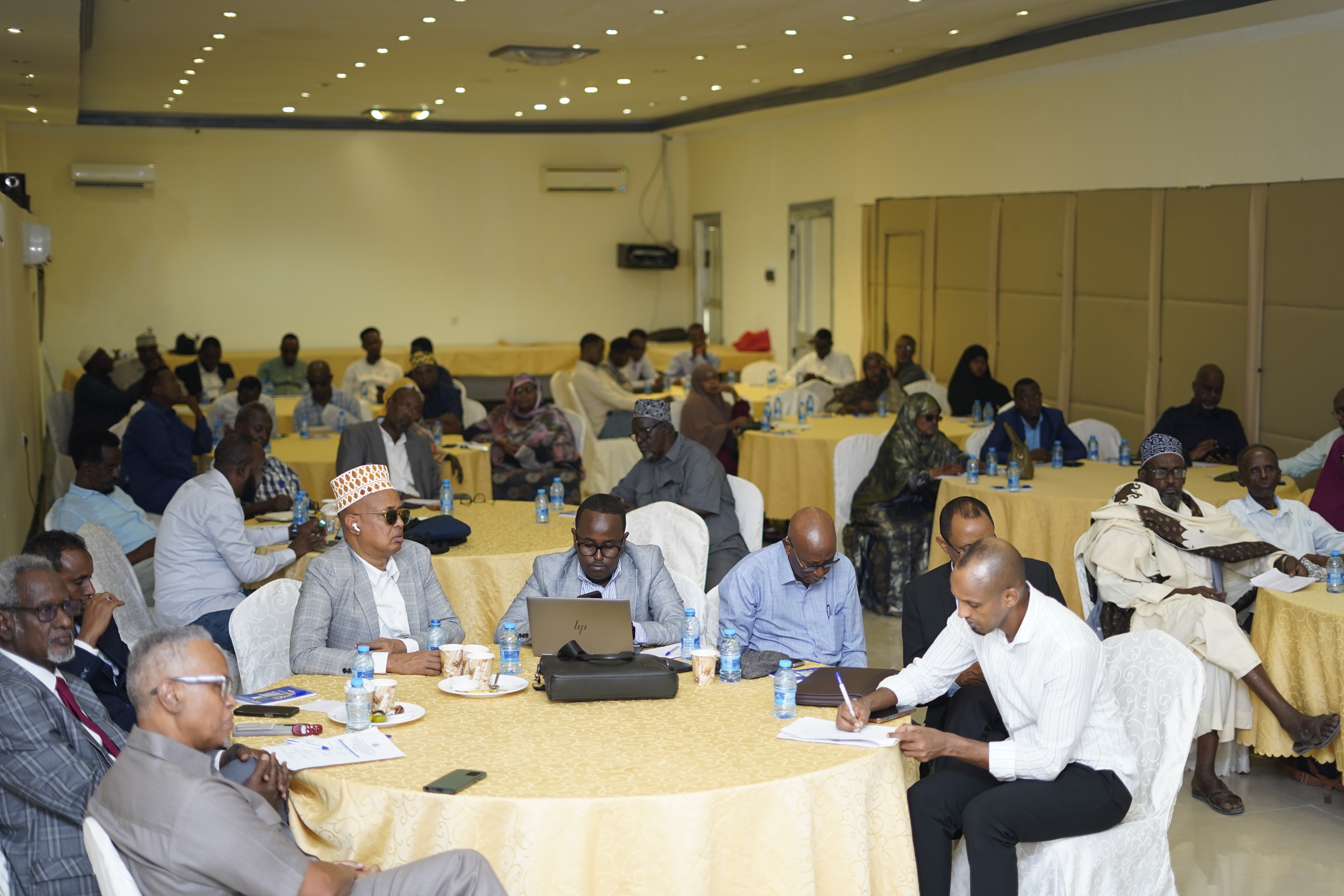
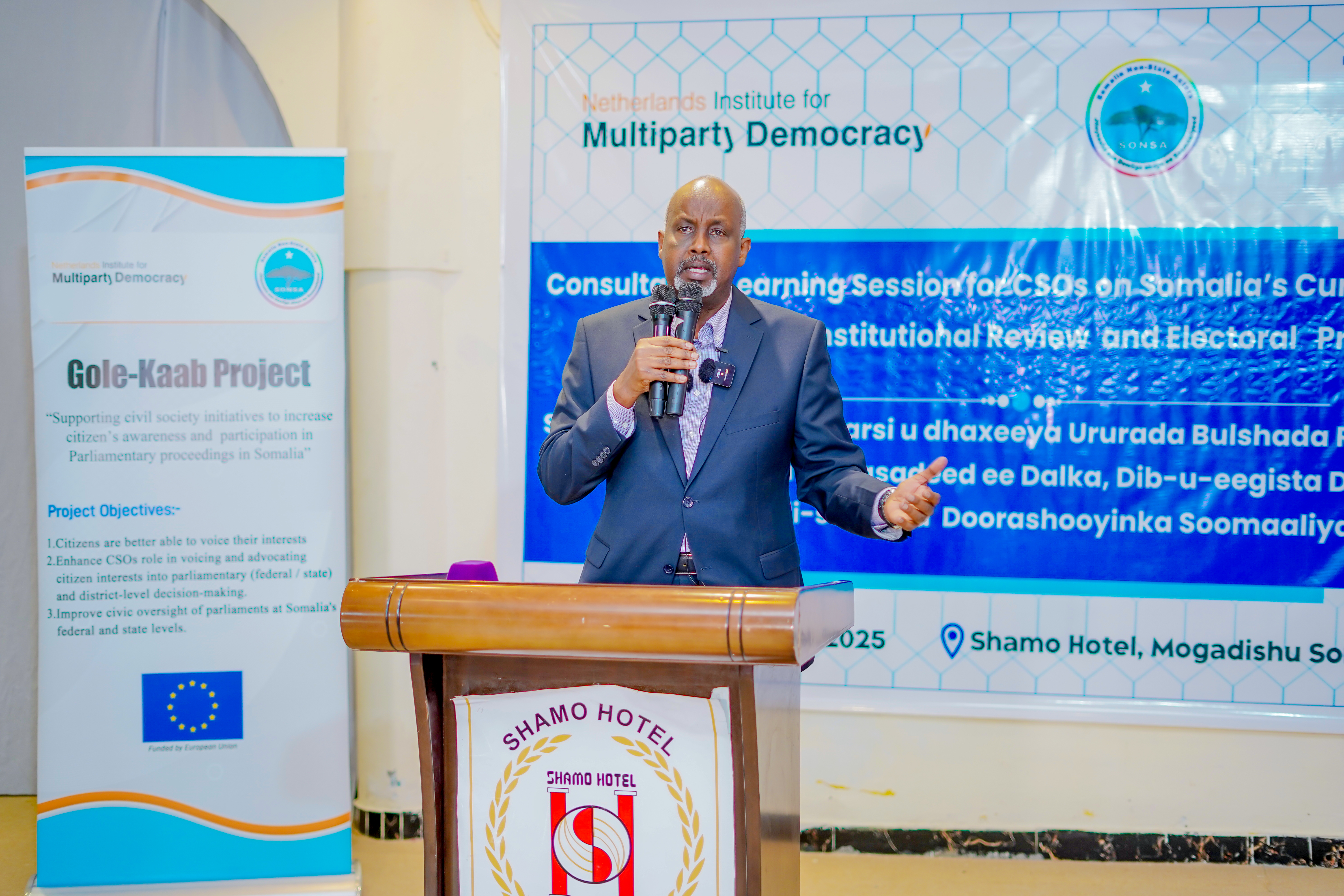
Mogadishu, October 25, 2025 Somali civil society under the SONSA umbrella, through the GoleKaab Project, held a high-level Consultative Learning Session in Mogadishu to discuss the country’s current political situation, the constitutional review process, and the forthcoming electoral cycles. The gathering brought together a wide range of participants, including civil society networks, traditional elders, women’s coalitions, youth groups, and other community stakeholders. The session provided a valuable perspective for examining the state of civic participation in Somalia and exploring ways to strengthen democratic governance during a period marked by political uncertainty and institutional transition. The session was officially opened by Mr. Osman Mohiadin Moallim, the Chairperson of Somalia Non-State Actors SONSA, who emphasized the urgency of maintaining focus on citizen engagement and responsible political leadership. He encouraged participants to share practical insights that could contribute to Somalia’s democratic transformation and reinforce accountability across institutions. Building on these exchanges, Somali civil society released a detailed press statement outlining key national concerns discussed during the meeting and reaffirming the crucial role of civil society in promoting dialogue, peace, and stability across the country. The press release expressed deep concern over the escalating political tensions between the Federal Government leadership and several Federal Member State leaders. Civil society noted that these recurring disputes continue to stall state-building and undermine national security. SONSA stressed that political disagreements must be addressed through constructive, lawful, and inclusive dialogue guided by the Somali Provisional Constitution 2012. It further urged the Federal Government to revive structured dialogue platforms with opposition groups and other political actors to rebuild public trust and facilitate broader participation in ongoing national reforms. Delays in regional elections were identified as a major obstacle to democratic governance. Participants highlighted that timely and credible elections are essential for strengthening federalism, legitimacy, and service delivery at all levels. In particular, civil society welcomed the planned Banadir local council elections, recognizing their significance for enabling residents to elect accountable representatives. SONSA and its partners reaffirmed their commitment to supporting the Banadir elections through voter education campaigns, public awareness efforts, and independent monitoring. The press release outlined several recommendations to ensure credible and transparent polling, including protecting the independence of the electoral commission, ensuring equal media access for political actors, deploying well-trained security personnel at polling centers, and expanding polling stations to reduce overcrowding. The discussions also addressed concerns related to government land management practices, including the eviction of more than 100,000 displaced citizens from public land—an issue civil society described as a serious human rights challenge. SONSA proposed the establishment of a joint committee comprising representatives from the Federal Government, the Banadir Regional Administration, and civil society organizations. This committee would investigate grievances, document the impact of land-related decisions, and develop sustainable, rights-based solutions. Participants also emphasized the need for a long-term mechanism to coordinate cooperation between the Federal Government and Federal Member States and to generate policy recommendations on unresolved national issues. The event concluded with a renewed commitment from civil society organizations to continue championing inclusivity, accountability, and democratic participation in Somalia. SONSA reaffirmed its dedication to supporting the implementation of critical political processes, including constitutional review and local elections, through civic engagement and collaborative problem-solving. Participants urged all stakeholders to avoid actions that could undermine public confidence or destabilize ongoing political efforts. SONSA encouraged the public and partner organizations to access the full press release—available in both Somali and English—to deepen understanding of the recommendations presented and to support the broader movement toward peace, stability, and responsive governance in Somalia.